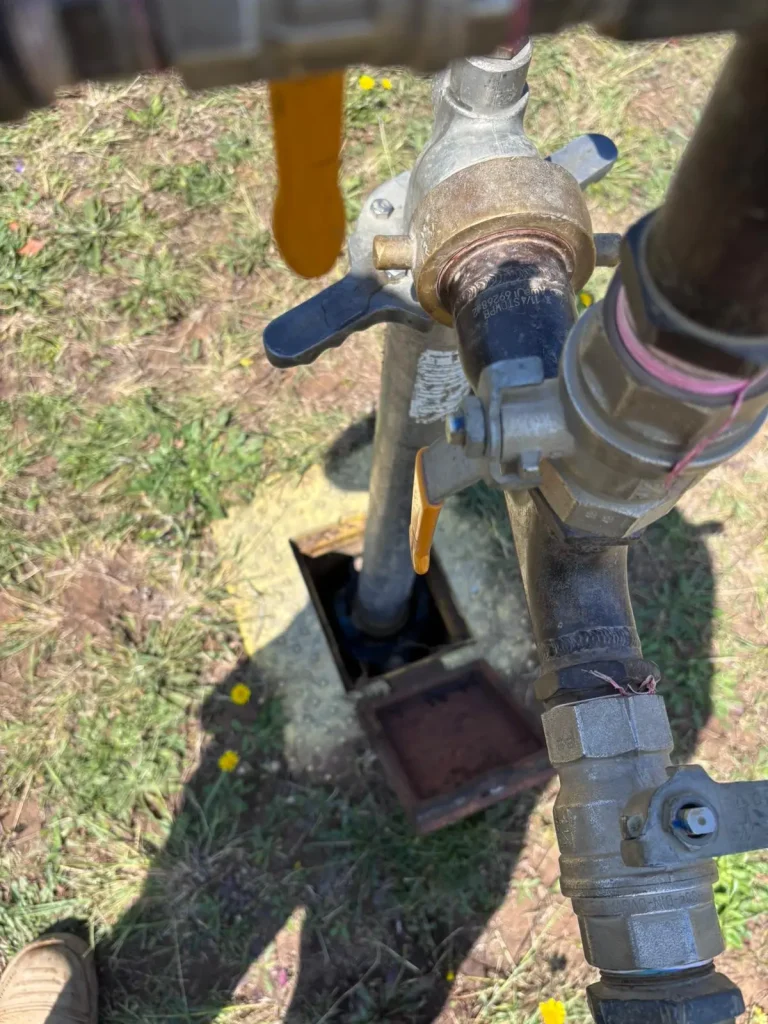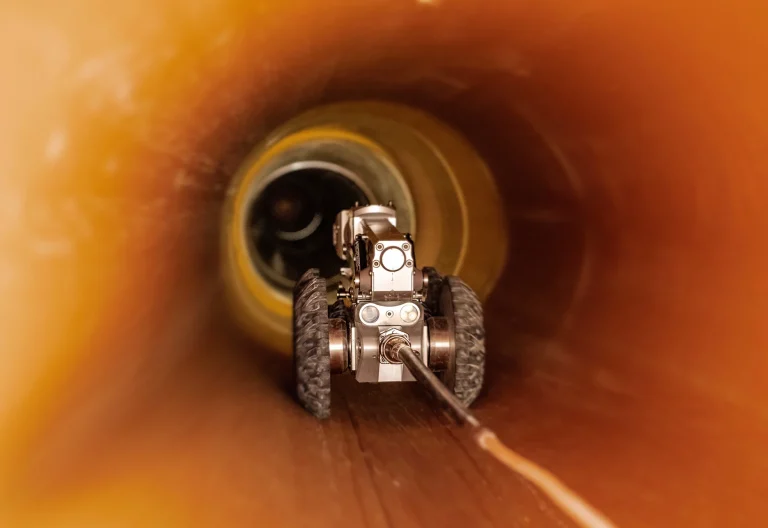
Most pipe testing delays have nothing to do with the pipe. They come from a site that is not quite ready: a maintenance hole still full of debris, a thrust block that has not cured, no access for the test vehicle, or nobody on site who knows which sections are ready. A little preparation means the tester can arrive, test and leave with a result the same day.
Use this checklist before you book hydrostatic, air or vacuum, maintenance hole vacuum or CCTV testing.
1. Confirm what needs to be tested
- Check the project specification and the water authority’s requirements for which tests apply to which assets.
- Mark up a plan showing the sections and structures that are ready, with maintenance hole numbers or chainages.
- Confirm whether results are needed as a hold point before backfill, paving or handover.
Not sure which tests apply? See which pipe testing service do I need and who is responsible for organising pipe testing.
2. Get the pipeline physically ready
- Pipes laid, jointed and bedded to specification, with backfill placed as the test method requires.
- Lines and maintenance holes cleaned out: no soil, stones, concrete slurry or water ponding in the invert.
- For pressure mains, thrust blocks and anchors in place and cured, and valves and fittings installed.
- Ends, branches and junctions capped or plugged so each test section can be isolated.
3. Sort out water, access and safety
- Water: for hydrostatic testing, a water source for filling and a plan for discharging test water.
- Access: clear vehicle access to each test point, with maintenance hole lids accessible and not buried under stockpiles.
- Traffic and safety: any traffic control, excavation barriers or confined space requirements arranged in advance.
- Site induction: let us know about induction or permit requirements before the booking date.
4. Plan the order of testing
On a typical gravity sewer, testing follows the build: compaction tests as backfill goes in, then air or vacuum testing of the pipe, vacuum testing of maintenance holes, deflection testing and CCTV once backfill is complete. Pressure mains are usually hydrostatically tested once fittings and thrust restraints are in place. Booking these in sequence avoids paying for a return visit. The guide to deflection and compaction testing explains why the backfill-related tests come later.
5. Have someone on site
A site contact who knows which sections are ready, and can open lids or move equipment, makes a big difference. If a section fails, they can also arrange the repair so it can be re-tested while the tester is still nearby. See what happens before pipe testing begins.
6. Know what you will get back
After testing you receive a report recording what was tested, where, how and the result. That report is what your engineer, certifier or water authority will ask for. For timing, see how long a pipe test takes and how soon reports are available.
Ready to book?
J & J Pipe Testing works with contractors on tight programs across Greater Sydney, Newcastle and the Hunter, the Central Coast, Wollongong and the Illawarra, and the South Coast. Send us your plan and the sections that are ready through our quote form, or contact us.