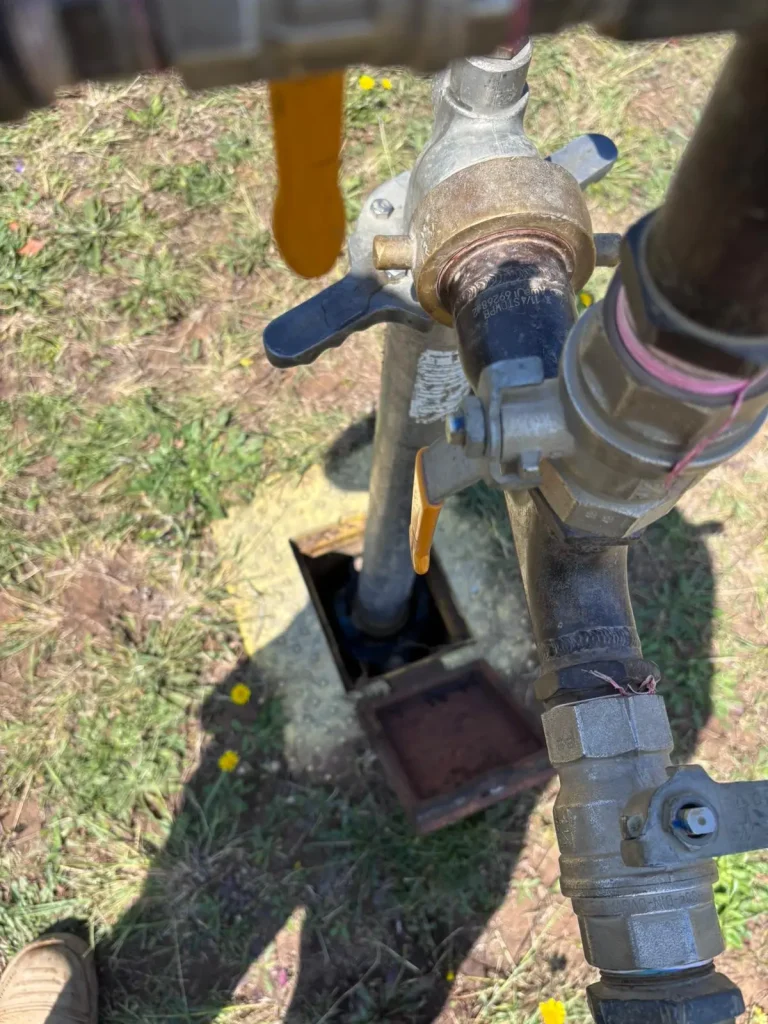
Pressure testing for water mains, fire mains and pressure sewers
Hydrostatic pressure testing is a controlled process that confirms the integrity and leak resistance of new or modified pressure pipelines. It verifies that water mains, rising (pressure) sewer mains and fire mains can withstand their operating pressures before they are commissioned.
It is required for Section 73, Sydney Water and council compliance in the Sydney Water area, and by Hunter Water, Central Coast Council, Shoalhaven Water and other water authorities for new pressure mains elsewhere in NSW.
How the test is carried out
- The test section is isolated and filled with potable water, and any trapped air is carefully removed
- Water is pumped in until the target test pressure, well above normal mains pressure, is reached
- The line must hold that pressure for a set duration; any drop is measured by the volume of water added during the hold period
- Turbidity is monitored to make sure water clarity meets the required standard
Testing is carried out in accordance with WSA 03-2011-3.1 (Sydney Water Edition 2014), or the code edition your water authority specifies. For water and fire mains it is often paired with flow and pressure testing at commissioning.
Systems we test
- Water main networks
- Pressure (rising main) sewer systems
- Fire mains and hydrant lines
- PVC, HDPE and ductile iron pipelines
What the test confirms
- A leak-free installation before commissioning
- System strength under sustained high pressure
- Compliance with infrastructure approval requirements
- Confidence in long-term performance
What you receive
A NATA accredited report for each section tested, recording the test pressure, hold duration, make-up water volume and result, ready for your engineer, certifier or water authority. You can view our accreditation on the NATA register.
Preparing for a hydrostatic test
Thrust blocks and anchors should be in place and cured, fittings installed and a water source and discharge plan arranged. Our site preparation checklist covers what to have ready, and hydrostatic vs air testing explains which test suits which asset.