Every new water main, sewer and stormwater line has to prove it is sound before it goes into service. For most projects that proof is a pressure test, and the two methods you will hear about most are hydrostatic (water) testing and air or vacuum testing. They answer the same question, “does this pipeline leak?”, but they suit different assets, sites and specifications.
This guide explains how each test works, where each one is normally used, and how to tell which one your project needs.
What a pressure test is checking
A pressure test isolates a section of pipe, fills or pressurises it, and then monitors it over a set period. If the pressure holds within the allowable limit, the joints, fittings and pipe wall are performing as designed. If it drops, something is letting water or air through, and the section has to be investigated and repaired before it can be re-tested.
The test pressure, duration and pass criteria are not chosen by the tester. They come from the project specification and the standard the asset is being built to, which in NSW is usually a WSA code or the local water authority’s edition of it. See what standards apply to pipe testing for more on how those requirements are set.
Hydrostatic testing: water under pressure
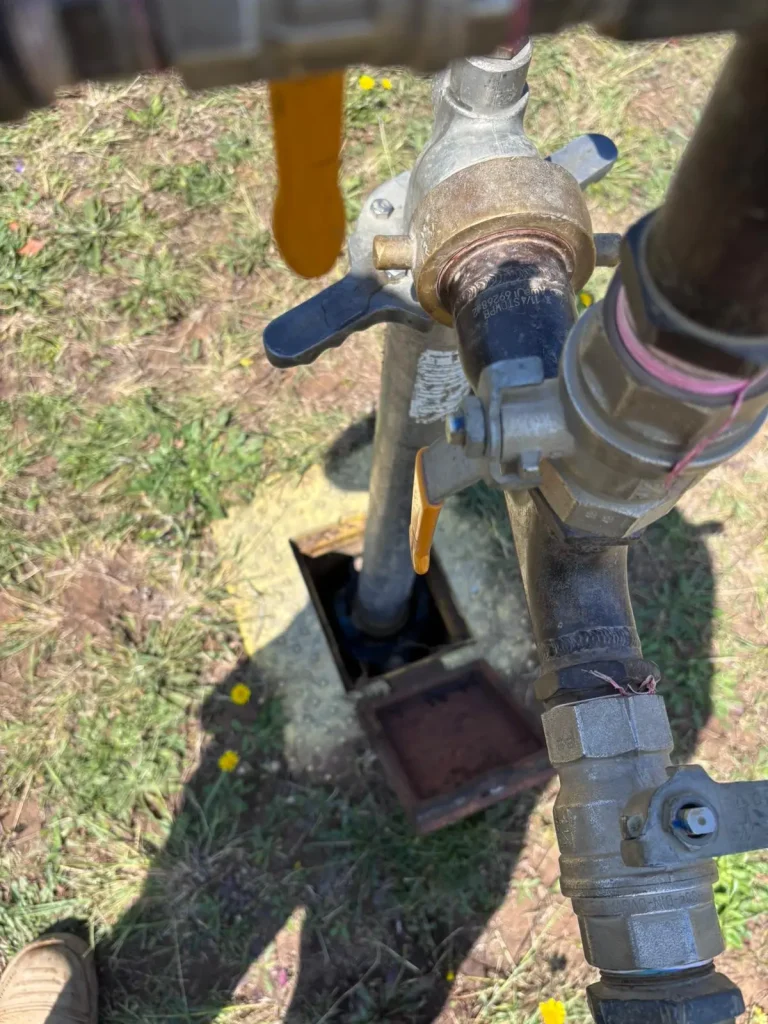
Hydrostatic testing fills the pipeline with water, removes trapped air and raises the internal pressure above normal working pressure. The pressure is then held and monitored, and any loss is measured against what the specification allows.
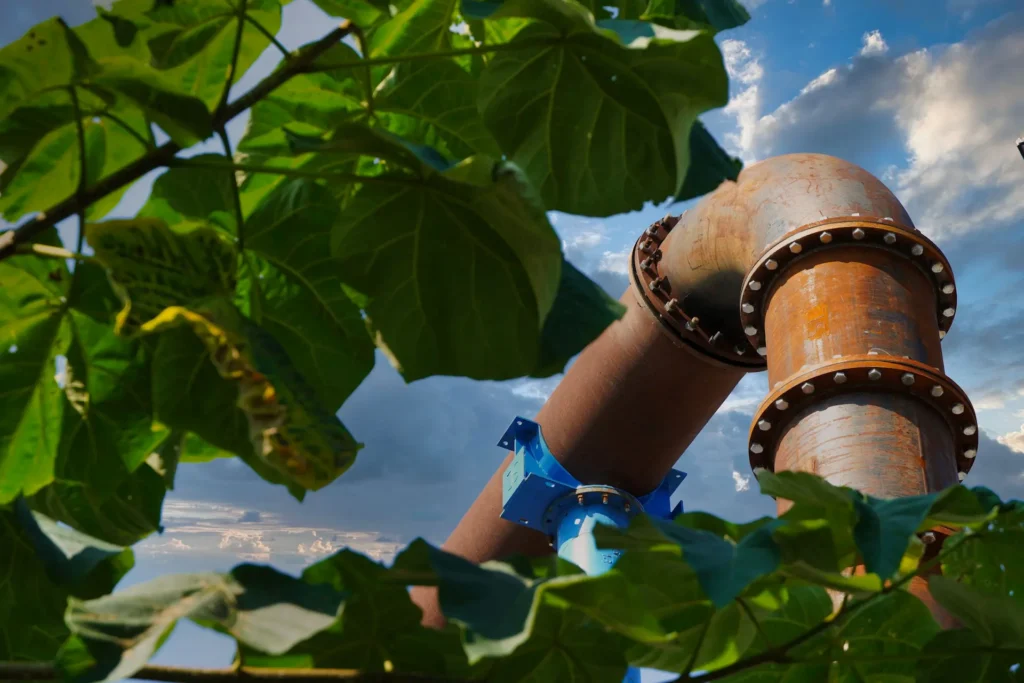
Hydrostatic testing is the standard method for pressure pipelines: drinking water mains, fire mains and rising (pressure) sewer mains. Because these pipes carry water under pressure every day, testing them with water at an elevated pressure is the most direct way to show they will cope in service. For water and fire mains this often sits alongside flow and pressure testing of hydrants and connections.
Things to plan for
- A suitable water source and a way to fill the line slowly so air can be released.
- Thrust blocks and anchors that have cured, so fittings do not move under test pressure.
- A plan for discharging the test water once the test is complete.
Air and vacuum testing: no water required
Air or vacuum testing of pipelines seals the ends of a pipe section and either pressurises it with low-pressure air or draws a vacuum. The test then times how long the pressure (or vacuum) takes to change. A section that holds within the allowed time passes.
Air and vacuum testing is commonly used on gravity sewers, where the pipe is not designed to run under internal pressure and filling long runs with water would be slow and wasteful. Maintenance holes and other chambers can be checked the same way through vacuum testing of structures, which seals every inlet and outlet before the vacuum is applied.
Why contractors like it
- No need to source, fill and dispose of large volumes of water.
- Tests are usually quick to set up between maintenance holes.
- Results are easy to repeat after a repair.
For more detail on the method itself, see what is air pressure testing and what is vacuum testing.
Hydrostatic vs air testing at a glance
- Typical assets: hydrostatic for water mains, fire mains and pressure sewers; air or vacuum for gravity sewers and maintenance structures.
- What is used: water at elevated pressure, or low-pressure air or vacuum.
- Set-up: hydrostatic needs water supply, air release and discharge; air or vacuum needs good seals and plugs at each end.
- Who decides: the project specification and the water authority’s standards, not personal preference.
Which test does my project need?
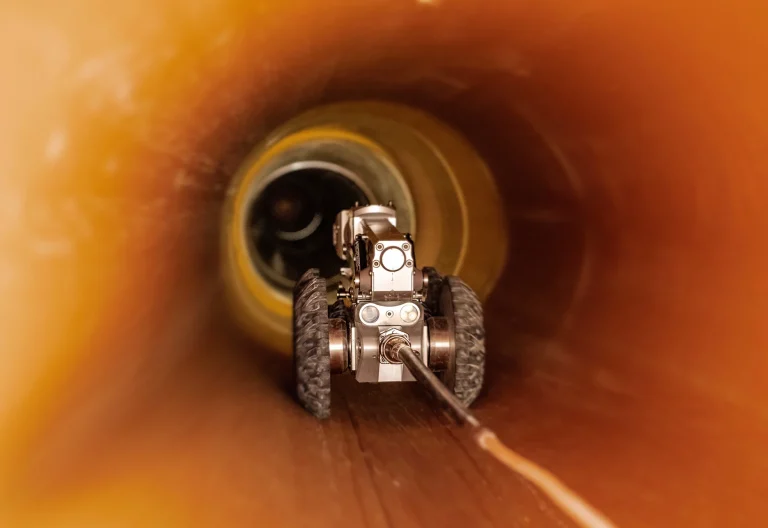
Start with the specification and the authority your assets will be handed to. In most cases the answer follows the type of asset: pressure pipelines get a hydrostatic test, gravity sewers get an air or vacuum test, and maintenance holes get a vacuum test. Many subdivisions need all three, plus CCTV inspection and deflection testing, before the work can be accepted.
If the specification is unclear, or the site makes one method impractical, talk to your tester before you book. Our FAQ on which pipe testing service you need is a good starting point, and does Sydney Water require pressure testing covers projects in the Sydney Water area.
What happens if a section fails?
A failed test is not the end of the job. The section is investigated to find the leak, repaired, and re-tested until it passes, and the report records the result. Finding the problem now is far cheaper than finding it after the road is sealed. Read more in what happens if a test fails.
Book NATA accredited pressure testing
J & J Pipe Testing carries out NATA accredited hydrostatic, air and vacuum testing for contractors, developers and councils across Greater Sydney, Newcastle and the Hunter, the Central Coast, Wollongong and the Illawarra, and the South Coast. Request a quote or contact us to book a test.