New water and sewer assets in NSW are not handed over to just one organisation. Depending on where your project is, the pipes you lay will end up owned and operated by Sydney Water, Hunter Water or a council water authority, and each one sets the standards your testing has to meet before it will accept the work.
This article explains who that authority is in each region we work in, what that means for your testing, and how to avoid surprises at handover.
Why the water authority matters
Most authorities build on the national WSA codes, such as the water supply code (WSA 03) and the gravity sewerage code (WSA 02), but many publish their own editions, supplements or technical specifications on top. Those documents decide which tests are required, how they are carried out, what counts as a pass and what the test report must show. For background, see who determines compliance requirements and what standards apply to pipe testing.
Water authorities by region
Greater Sydney: Sydney Water
Across Greater Sydney, new water and wastewater assets are built to Sydney Water’s standards and accepted through Sydney Water’s developer process. Testing results form part of the documentation your Water Servicing Coordinator needs on the way to a Section 73 Compliance Certificate. Sydney Water also requires testing to be done by suitably accredited providers: see can any contractor perform Sydney Water testing.
Wollongong and the Illawarra: Sydney Water
Sydney Water also services the Wollongong, Shellharbour and Kiama areas, so projects in the Illawarra follow the same Sydney Water standards and processes as Greater Sydney.
Newcastle and the Hunter: Hunter Water
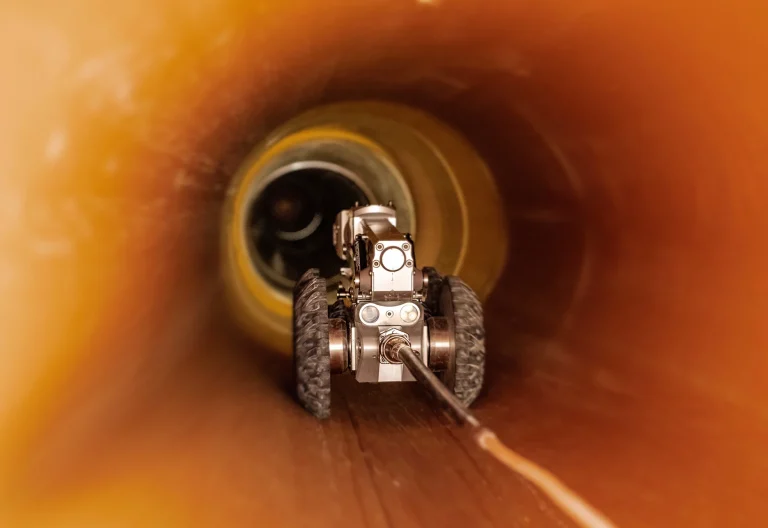
Hunter Water is the authority for Newcastle, Lake Macquarie, Maitland, Cessnock and Port Stephens, with its own standards and developer requirements. In the Singleton area, Singleton Council is the water authority. Pressure, vacuum, CCTV and deflection testing are all common requirements for new assets.
Central Coast: Central Coast Council
On the Central Coast, the council is the water and sewer authority. Acceptance testing typically follows WSA 02 requirements for sewers, including compaction, pressure and vacuum testing, maintenance hole vacuum testing, CCTV and deflection testing.
The South Coast: Shoalhaven Water
In the Shoalhaven, Shoalhaven Water (part of Shoalhaven City Council) sets the requirements. Testing is carried out to the WSA codes and Shoalhaven Water’s own requirements, including pressure testing of water and sewer mains, ahead of a Certificate of Compliance.
For a full list of the locations we cover in each region, see our service areas.
What stays the same everywhere
- The tests themselves. Hydrostatic, air and vacuum, CCTV and deflection testing are used across all five regions. What changes is the detail of how they are specified and reported.
- Accredited results. Authorities, engineers and certifiers rely on test results from an accredited provider. NATA accreditation gives that independent assurance.
- Documentation. A clear test report for each section is what gets your assets accepted. See what documentation may be required for Sydney Water compliance.
Avoiding surprises at handover
- Check which authority your assets will be handed to before construction starts, not at the end.
- Read that authority’s current requirements; they can change between projects. See are compliance requirements the same for every project.
- Book testing as sections are completed, so a failure is found while the trench is still open.
- Keep every test report together, organised by section, for the handover package.
Testing across all five regions
J & J Pipe Testing is NATA accredited, Sydney Water accredited and a WSA certified member, and works from Smeaton Grange across Greater Sydney, Newcastle and the Hunter, the Central Coast, Wollongong and the Illawarra, and the South Coast. Request a quote or contact us to talk through the requirements for your project.